Summary Box
Summary: This guide explains seven specific signs that a website sold as "custom development" is actually a pre-built template with surface-level customization, and outlines what a genuinely custom outsourcing process looks like from discovery through launch.
quote
"Custom" is the most overused word in web development. The question isn't whether an agency says it it's whether they can prove it.
key highlights
- Most "custom website development" quotes are actually customized WordPress, Shopify, or Wix themes
- Page-count pricing (e.g., "5 pages for $X") is a strong signal of template-based work, not custom development
- A real custom build always starts with a discovery phase before any design work begins
- Genuinely custom sites are built on clean, purpose-specific code not a theme framework with overrides
- Asking to see the staging environment mid-project is the fastest way to verify real custom work
- A 6 to 12 week timeline is normal for true custom development — anything promised in days is template work
Introduction
You searched for "custom website development," found three agencies, and they all said the same thing: "We build 100% custom websites tailored to your brand."
Then you got three quotes. One wants $400. Another wants $4,000. The third wants $40,000.
Here's the part nobody tells you: there's a good chance none of them are actually building you something custom. Two of them are probably taking a pre-built template, changing your logo and colors, and calling it custom development.
This isn't a Pakistan problem, a freelancer problem, or a budget problem. It happens at every price point. The word "custom" has been stretched so far in this industry that it barely means anything anymore and most buyers don't find out until the limitations show up six months after launch.
This guide walks through the exact signs that separate real custom development from a dressed-up template, so you can ask the right questions before you sign anything.
What "Custom Website Development" Actually Means
Custom website development means a site built specifically for your business from the ground up, with code written for your exact requirements, not adapted from someone else's framework.
That's different from a customized template, where an agency starts with a pre-built theme (a WordPress theme, a Shopify theme, a Wix template) and changes the colors, swaps the logo, and rearranges a few sections. The result might look unique to you, but underneath, dozens or even thousands of other websites share the exact same code structure.
Both approaches can produce a perfectly good-looking website. The difference shows up later in load speed, in how easily the site can grow, and in whether you're locked into one platform forever.
"A website can look completely original and still be running on the same skeleton as five thousand other sites. Looking custom and being custom are two different things."
Why This Matters More in 2026 Than It Used To
A few years ago, the gap between template and custom development was mostly cosmetic. That's no longer true.
Search engines now reward genuinely fast, lightweight code. Template frameworks carry extra CSS, JavaScript, and plugin bloat that a real custom build simply doesn't have. Two sites can look identical, and the custom-built one will consistently load faster and rank better.
AI search and answer engines (ChatGPT, Perplexity, Google AI Overviews) read your site's structure, not just its design. This is also where autonomous AI agents and RAG-based systems are changing what "well-built" even means a clean, purpose-built codebase is easier for these systems to parse and cite correctly. A template stuffed with unnecessary code creates noise that can hurt visibility in AI-generated answers.
Businesses are scaling faster than ever, and a template that worked for a 5-page brochure site often can't handle a booking system, a custom dashboard, or a multi-language expansion without being rebuilt entirely.
If you're paying for "custom," you should be getting something that can actually grow with you — not something you'll have to throw away in two years.
Common Mistakes People Make When Hiring for "Custom" Work
- Trusting the word "custom" without asking what it means to that specific agency. Every agency defines it differently, and almost none will volunteer the truth unprompted.
- Choosing based on page-count pricing alone. "5 pages for $300" is a pricing model built for template work, not custom architecture — but it's rarely framed that way.
- Skipping the discovery phase question. If an agency can give you a fixed quote in a five-minute call without asking about your business goals, your users, or your technical requirements, that's a sign they already have a template in mind.
- Assuming a higher price guarantees real custom work. Some agencies charge custom-development prices for templated builds simply because they can. This applies just as much to custom mobile app development as it does to websites an "app" built on a no-code template platform carries the same hidden limitations.
- Never asking what happens if you want to change platforms later. A real custom site gives you full code ownership. A templated site often locks you into one platform's ecosystem indefinitely.
The 7 Red Flags Step-by-Step Verification Guide
Here's exactly how to check, in order, before you commit to a project.
1. The quote came faster than the conversation
A real custom website requires understanding your business model, your users, your competitors, and your technical needs before anyone can responsibly quote a price or timeline. If you got a number within minutes of your first message, no actual planning happened — they're quoting from a template they already know the cost of.
2. Pricing is based purely on page count
"$500 for 5 pages, $800 for 10 pages" is a pricing structure built around assembling pre-made template sections, not designing and coding pages from scratch. Custom pricing is based on functionality, complexity, and hours not a flat per-page rate.
3. They can't explain their tech stack in plain language
Ask: "What is this website built on?" A team doing real custom work will say something specific React, Laravel, a custom WordPress theme coded from zero, Next.js. If the answer is vague ("we use the best tools for the job") or they dodge the question, the underlying platform is probably a theme they don't want to name.
4. The demo they showed you looks suspiciously similar to other sites you've seen
If a "custom" portfolio piece has the same layout structure, the same section order, and the same interaction patterns as three other unrelated businesses' sites — that's not a coincidence. That's the same template wearing different branding.
5. There's no discovery or requirements-gathering phase in the timeline
Genuine custom development always starts with discovery: understanding goals, mapping the sitemap, defining functionality, and only then moving to design. If the project plan jumps straight from "deposit paid" to "here's your homepage mockup," there was no real planning stage — just template selection.
6. The turnaround time is unrealistically fast
A true custom website even a relatively simple one — takes real engineering time. If someone promises a fully custom business website in 3 to 5 days, they are either reusing a previous client's codebase or working from a heavily pre-built framework. That's not necessarily dishonest, but it isn't custom in the way the term implies.
7. You're not given access to a staging environment during development
This is the single fastest way to verify real custom work. Ask to see the site mid-build on a staging URL. If what you see is a generic theme with placeholder content that looks like dozens of demo sites you can find by searching the theme name, you have your answer.
"If an agency hesitates to show you a staging link mid-project, that hesitation usually tells you more than any explanation would."
Walks through your requirements: If you're currently comparing quotes, our discovery process walks through your requirements before any number is quoted — happy to show you exactly how that works.
What Real Custom Website Development Looks Like (The Honest Process)
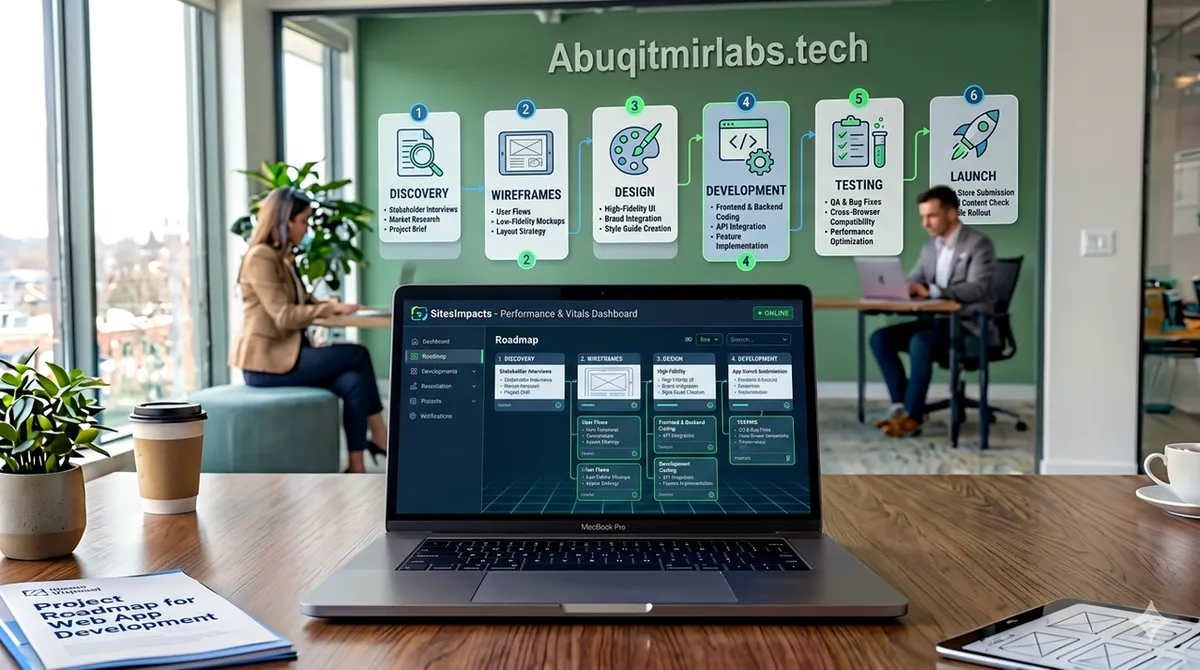
This is the process a legitimate custom build actually follows, phase by phase:
Phase 1 — Discovery (typically 3 to 7 days) Understanding your business goals, target audience, competitors, required features, and technical constraints. This phase produces a written scope document — not a guess.
Phase 2 — Information architecture and wireframes (5 to 10 days) Mapping out the sitemap and page structure before any visual design happens. This step is almost always skipped entirely in templated work.
Phase 3 — Custom design (1 to 3 weeks) Designing the visual system specifically for your brand — not selecting a theme and recoloring it.
Phase 4 — Development (2 to 5 weeks) Writing the actual code: front-end, back-end, integrations, and functionality specific to your requirements.
Phase 5 — Testing and QA (1 to 2 weeks) Cross-browser, cross-device testing, performance optimization, and security checks.
Phase 6 — Launch and handover (3 to 5 days) Deployment, training, documentation, and full code ownership transfer to you.
Put together, a realistic custom website timeline runs 6 to 12 weeks for a standard business site, and longer for anything with custom functionality like booking systems, dashboards, or e-commerce logic. If your quote skips most of these phases, you're not buying custom development you're buying template assembly with custom branding.
Realistic Example
A clothing brand owner in Lahore was quoted $350 for a "fully custom Shopify website" with a 4-day turnaround. The site looked clean and matched her brand colors. Six months later, she wanted to add a custom loyalty points system and a multi-currency checkout flow. The developer told her the theme she was on couldn't support either feature without a full rebuild — because it was, in fact, a popular paid Shopify theme with her logo swapped in.
She ended up paying for a second build, this time asking the right questions upfront: what's the tech stack, can I see a staging link, and what does the discovery phase look like. The second agency walked her through an actual 8-week process, starting with a requirements document before any design work began. The final site cost more upfront, but it scaled with her business instead of breaking the first time she needed something beyond the template's limits.
This is the pattern that repeats across almost every "cheap custom site, expensive rebuild later" story you can see how a properly scoped discovery phase avoids exactly this in our case studies.
How Outsourced Website Development Should Actually Work
When you outsource website development to an agency or remote team — whether locally or internationally the process should be transparent at every step:
- Clear scoping before any pricing is given. No fixed quote without a discovery conversation.
- A documented timeline broken into phases, not a single vague delivery date.
- Staging access during development, so you can track real progress instead of waiting for a surprise reveal.
- Full code ownership on handover. You should never be locked into a developer's proprietary system.
- Direct communication with the actual people building your site not a sales layer that disappears once the contract is signed.
This is also where outsourcing genuinely earns its reputation as cost-effective: a well-managed outsourced team can deliver real custom engineering at a lower cost than many local agencies, because of differences in operating cost — not because corners are being cut on the actual development process.
Final Thoughts
None of this means every agency quoting low prices is lying to you, or that every expensive quote guarantees quality. It means the word "custom" by itself tells you nothing — it's the process behind it that matters.
If you ask to see the discovery phase, the tech stack, and a staging link, and an agency answers clearly and shows you real work in progress, you've found a team doing what they claim. If those questions get vague answers or pushback, you've learned something valuable before spending a single dollar.
The goal isn't to distrust every developer you talk to. It's to ask the three or four questions that separate genuine custom engineering from a well-marketed template because by the time the limitations show up, you've usually already paid for them twice.
Frequently Asked Questions
- Is a customized template the same as a custom website? — No, a customized template reuses shared code with surface branding changes; custom development is built from a unique codebase.
- How can I tell if my current website is a template? — Check the source code for theme names or search if your layout exists on marketplaces like ThemeForest.
- Is it ever okay to use a template instead of custom development? — Yes, for simple sites with limited budgets, as long as it's disclosed honestly.
- How long should real custom website development take? — Typically 6 to 12 weeks for a standard business site.
- Does custom development always cost more? — Usually, but the higher cost should come with a documented process and code ownership.
- What's the fastest way to verify real custom work? — Ask for staging access and a plain-language explanation of the tech stack.
We'll answer all of them: Comparing website development quotes right now? Ask us the same four questions in this article we'll answer all of them, show you a live staging link mid-project, and give you full code ownership at handover. Visit AbuQitmirLabs and see the difference between a quote and a plan.